
The Skagit River Dams Settlement Agreement: What's at Stake for Skagit Agriculture
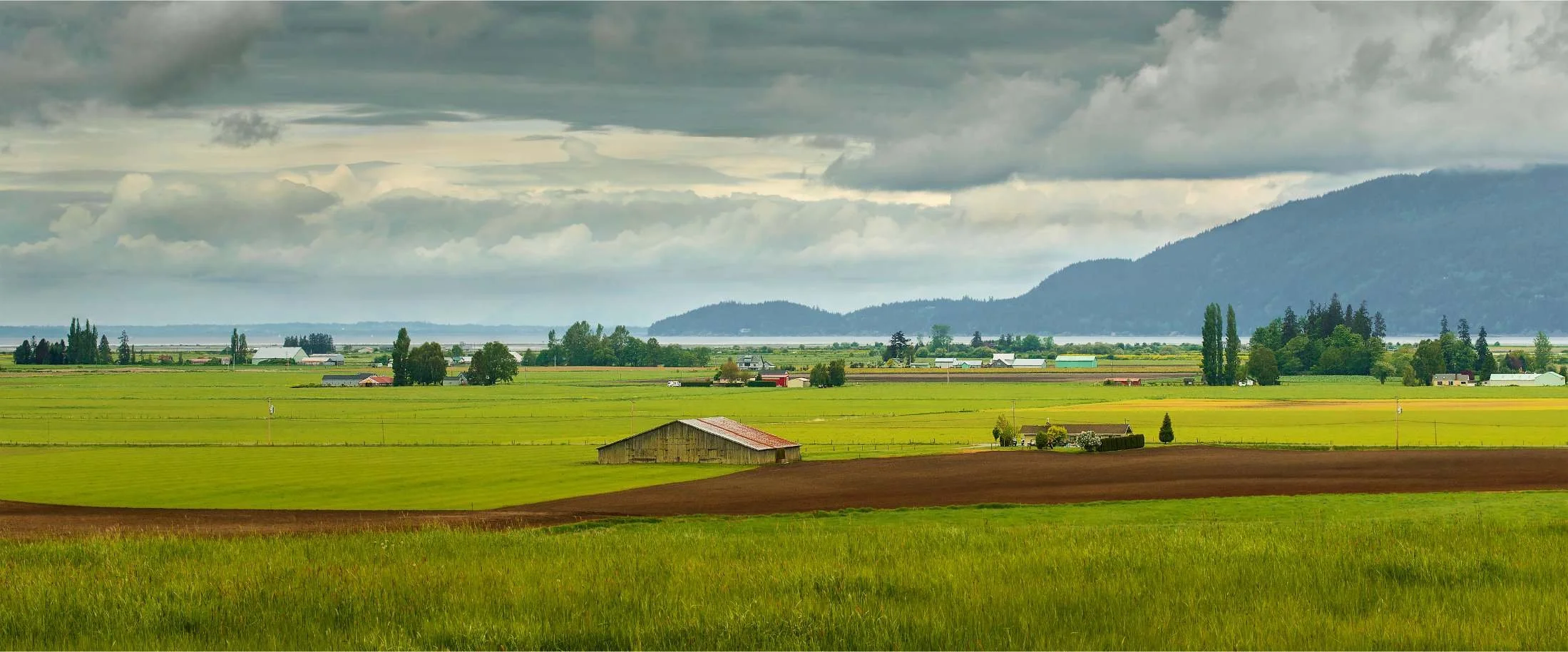
Skagit Valley farmland with Samish Bay in the distance.
After years of often contentious and secretive negotiations, a Comprehensive Settlement Agreement between Seattle City Light and a number of parties, including treaty tribes, federal agencies, local government, and non-governmental organizations, was signed by Seattle Mayor Katie Wilson on May 12. Now, the agreement heads to the Federal Energy Regulatory Commission which will conduct a formal environmental review involving many entities and compliance with several state and federal laws and agencies.
Utilities like Seattle City Light that operate hydroelectric dams like those on the Skagit River require a license that is renewed every 30 to 50 years. Since 2019, Seattle City Light has been negotiating with various stakeholders to meet demands for improving hydropower operations, along with flood control and fish management. Much of this process has centered on the protection, mitigation, and enhancement of ecological functions and resources in the Skagit River Basin—and the agriculture industry has paid close attention.
Over these years, the negotiations have occurred largely in confidential settings, something that has frustrated many in Skagit County who have wanted to know the issues being debated and the details being agreed to. Now that the settlement agreement is public, attention is shifting to understanding what the agreement contains and what it may mean for the future.
There are big-ticket items in the agreement. Skagit’s agriculture community has been focused especially on provisions affecting flood control and salmon recovery, primarily fish passage at the dams and habitat restoration in the deltas.
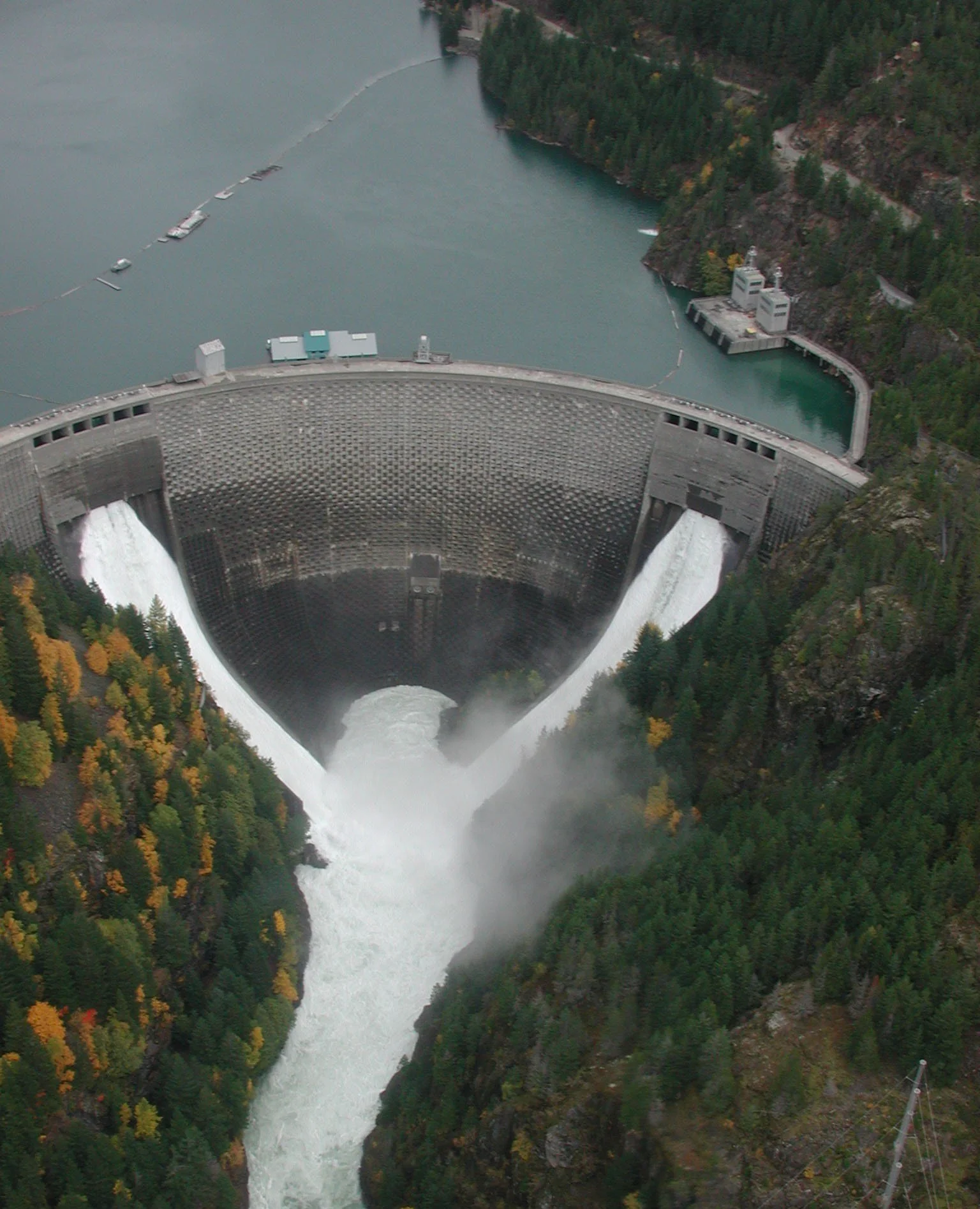
Ross Dam. Photo: US Army Corps of Engineers
Flood Control. As Skagitonians to Preserve Farmland has described before, the flood control settlement includes more and earlier flood storage at Ross Dam—140,000 acre-feet starting November 1 with an operational buffer going up to 165,000 acre-feet, compared to the existing license of 120,000 acre-feet starting December 1. Both of these changes update operations and better protect downstream farms, homes and businesses, and vital infrastructure. The recent flooding in December 2025 provided a visceral reminder that flood storage plays a critical role in safeguarding our community.
Fish Passage. Seattle City Light has pledged up to $979 million with $505 million as a minimum to build fish passage at the dams on the Skagit River. Championed especially by the three Treaty Tribes in the watershed who were not consulted when the dams were constructed, the Skagit Fish Passage Program is meant to help recover threatened species, connect habitat, and support tribal treaty rights. Before building fish passage facilities, Seattle City Light and partners will conduct feasibility and other studies to finalize the Fish Passage Implementation Plan. If these studies show fish passage isn’t feasible, or if conflicts emerge in the planning, Seattle City Light or any involved party can initiate a formal dispute resolution process. If fish passage is halted or deemed unfeasible (e.g., skyrocketing costs with insufficient outside funding), any unspent money from Seattle City Light’s guaranteed $505 million can be redirected to other fish recovery projects on agreement between Seattle City Light, agencies, and the tribes.
Skagitonians to Preserve Farmland executive director Lora Claus sees progress and risk in this. "People have worked tirelessly to get an agreement that addresses the harms caused by the dams—namely blocking upriver passage to nearly 40% of salmon habitat on the Skagit," she said. "Implementing fish passage is something only Seattle City Light can do. We are feeling cautious in that there are lots of ways it could be delayed, or later deemed too expensive." That minimum might then be directed toward other mitigation measures, such as converting farmland. "The worst-case scenario," Claus said, "would be Seattle doesn't implement fish passage, and instead targets more farmland for conversion to estuary, and Chinook continue to decline."
Habitat Restoration. This is the most complicated issue for Skagit agriculture, and the agreement funds $200 million for it.
The Skagit Estuary Habitat Enhancement Program assigns $75 million for estuary restoration. The goal of the program is to restore 1,300 acres of estuary within 15 years of Federal Energy Regulatory Commission approval of the relicensing of the dams. Interim benchmarks have been established: 200 acres by year four, 600 acres by year seven, 1,000 acres by year 10, and 1,300 acres by year 15. In the agreement, Seattle City Light states it “understands” and “respects the importance of farming” and “does not intend to utilize condemnation authority and believes that such authority is likely not available under these circumstances.” Despite these assurances, some worry that litigation might force condemnation, and farmers on the delta remain wary, especially when communication from Seattle City Light often neglects the agricultural perspective. Losing any farmland, for whatever purpose, is a sacrifice hard to accept.
SPF's concern goes beyond acreage. "The mandatory conversion of land to habitat, in the agreement, is not tied to the 2005 Skagit Chinook Recovery Plan," Claus said. "Without that tie, what stops Seattle from spending money on random projects that meet an acreage requirement but won't move the needle on Chinook recovery? All projects are not created equal—and while Seattle may not view flooding farmland as a loss, we do."
Seattle City Light will also provide $75 million for projects in the Skagit River Mainstem Habitat Enhancement program. Much of this investment targets connecting side channels and other habitat within the floodplain along the mainstem below the dams.
The rest of the money is spread through other smaller habitat programs, including in the North Cascades National Park Service Complex. The largest amount of the remainder, some $40 million, will be used following the approval of downstream fish passage at Ross Dam and will address factors that are determined to limit fish production and passage.
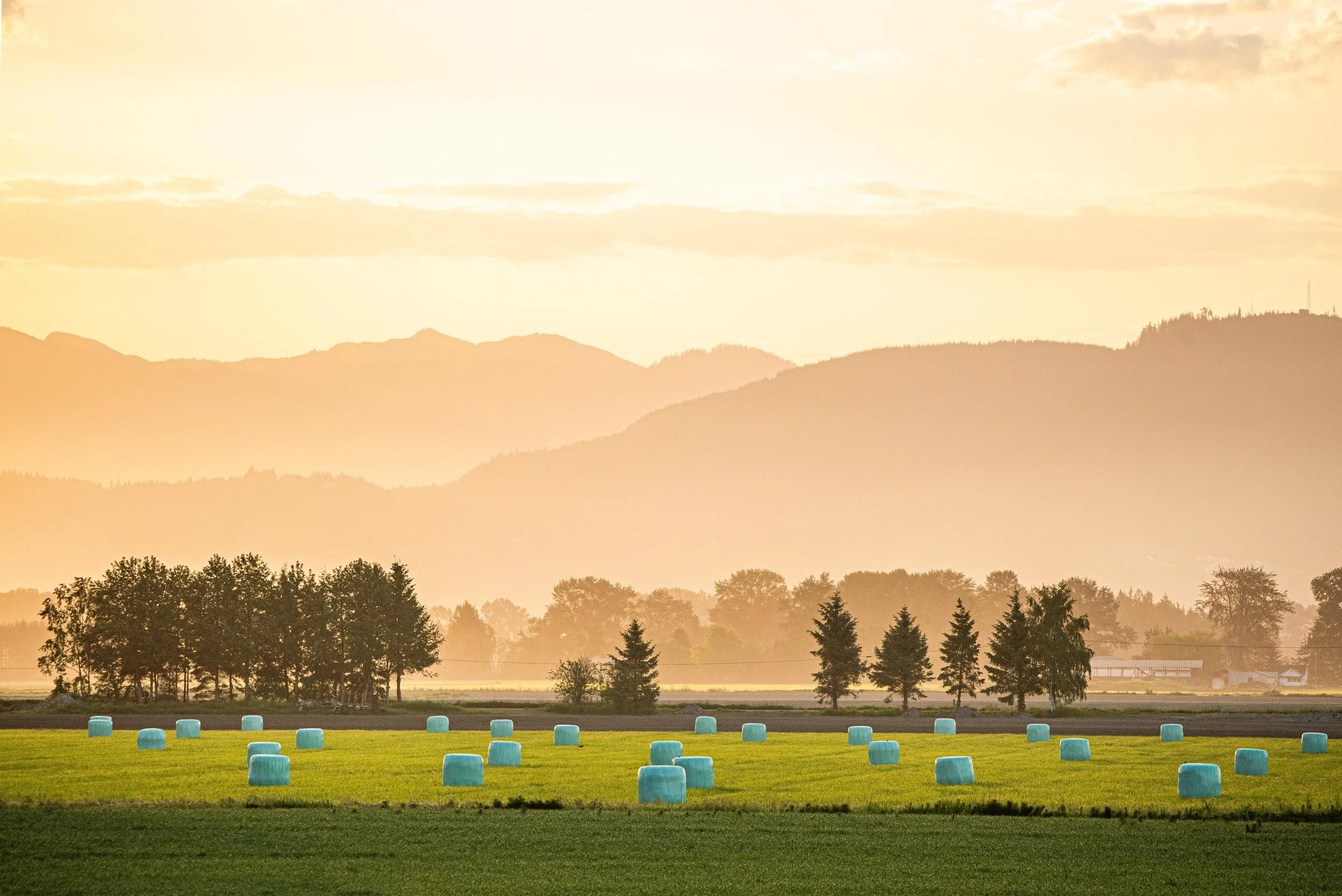
Hay bales on Skagit fields. Photo: Cedarbrook Studio
The Board of County Commissioners in Skagit County are signatories to the Comprehensive Settlement Agreement. In a statement announcing their approval in March, the commissioners praised the flood control measures and the investment in fish passage, citing the success of such programs on the Baker River with Puget Sound Energy’s dams. The commissioners also expressed caution with habitat funding.
This money “if directed appropriately, could help recover salmon and improve infrastructure resilience,” County Commissioner Ron Wesen said in a statement released at the time. To make that effective, though, will require the County’s involvement, along with the dike and drainage districts, to ensure a community approach prevails.
A central piece to meet these goals is the Skagit License Implementation Committee (SLIC), which is designed to implement and fund the fish passage and habitat programs. SLIC includes representatives from Seattle City Light, treaty tribes, and government agencies. However, Skagit County and local dike and drainage districts are not represented. The Board of County Commissioners passed a resolution expressing their interpretations and concerns about SLIC.
Key among those concerns is transparency and collaboration—central values of Skagitonians to Preserve Farmland. The Board of Commissioners asserted that SLIC must operate openly as required by state open public meetings and public records laws, which helps resolve one of the frustrations many local Skagitonians felt during the settlement negotiations.
The Board also noted that any projects necessarily involve county planning and regulatory authority over farmland and infrastructure. For this reason, the Board is participating in an advisory capacity only, reserving all regulatory and other rights. The Board insisted that SLIC must operate only as a bank disbursing funds, not as a venue to plan the projects, which should follow regular order with the County playing a central role in enforcing code. This resolution puts Skagit County and its positions on record.
“The task now is for our community to come together and hold Seattle accountable to its promises,” County Commissioner Peter Browning said in the same county statement. “We see this Settlement Agreement as long-overdue environmental justice and regional equity.”
The Board of Commissioners’ resolution noted that during the operation of the last license issued for the Skagit River dams, Seattle City Light purchased 11,000 acres for habitat projects. Acquiring that land not only takes acres out of county tax rolls but also potentially erodes Skagit’s agricultural base. Losing more farmland undermines the economy and the character of Skagit County.
The food, fiber, and flowers grown here, along with the open landscapes that define the valley, exist because the community has stood up at every turn to say farmland matters. As more attention focuses on estuary restoration, the risk to farmland increases. The lesson is clear to Claus: “Farmland does not disappear all at once. It is lost acre by acre, decision by decision. Skagitonians to Preserve Farmland remains steadfast, to ensure agriculture has a voice wherever the future of Skagit County is being shaped.”
Story by Adam Sowards: info@skagitonians.org
Learn More
Read more to learn about the dam relicensing process and other threats to farmland.
The Relicensing of the Skagit River Dams: Farmland at Risk https://www.skagitonians.org/blog/the-relicensing-of-the-skagit-river-dams-farmland-at-risk
A More Secure Future for Flood Control https://www.skagitonians.org/blog/floodcontrol-mg86c
Skagit Farmland in the Crosshairs of the Energy Transition https://www.skagitonians.org/blog/skagit-farmland-in-the-crosshairs-of-the-energy-transition