
Nothing Wasted: Skagit Gleaners Connects Food, Farms and Community
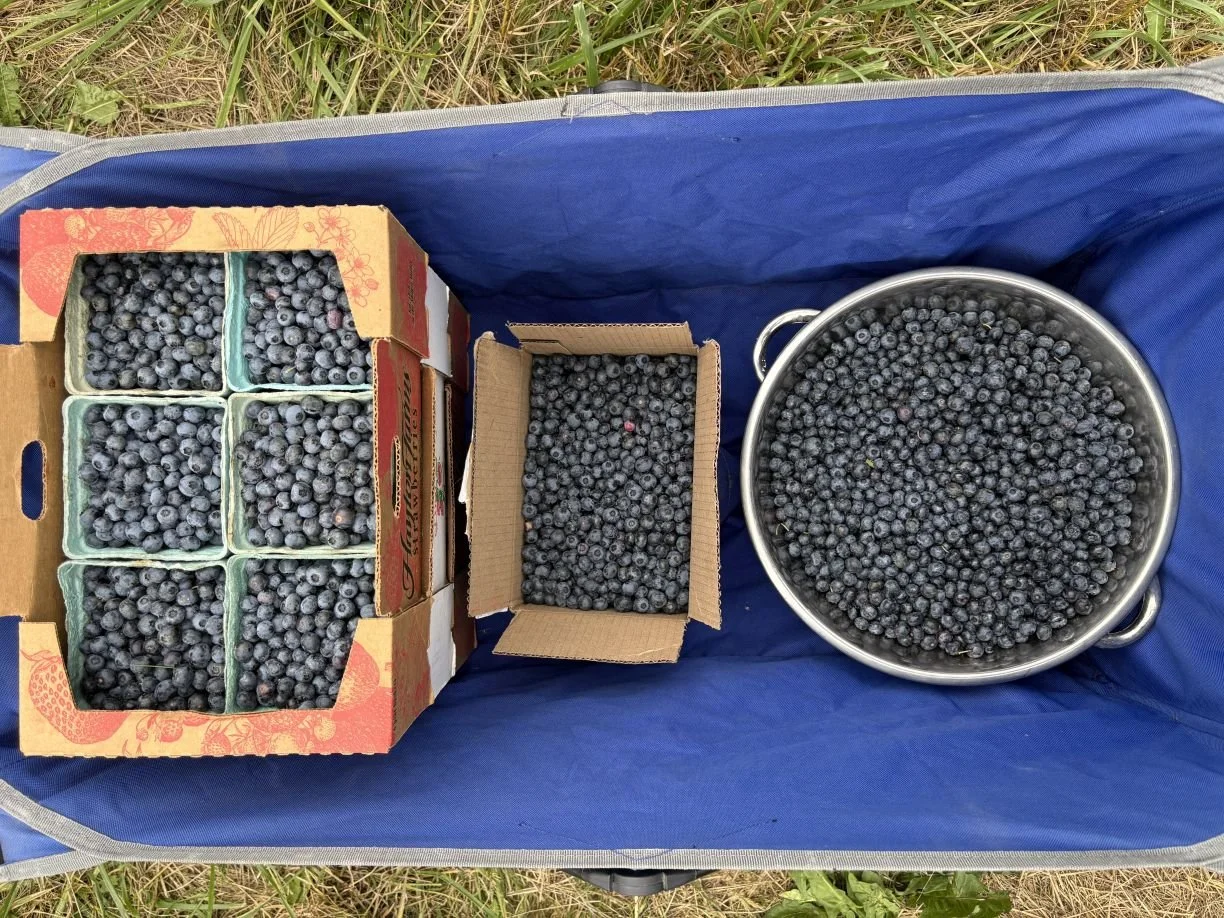
An abundance of blueberries picked during a recent gleaning by two families. Photo: Tahlia Honea
Tucked in an unassuming beige building by the railroad tracks in Mount Vernon, is a rare market. Mothers, retirees, and other frugal shoppers pile their carts high with watermelons, focaccia bread, local chicken, corn, zucchini, lettuce and an occasional pizza. But instead of the dread of dollars adding up when they get to the checkout, the higher the total, the better. The only thing counted here is how many dollars they’ve saved, and the amount owed is always zero.
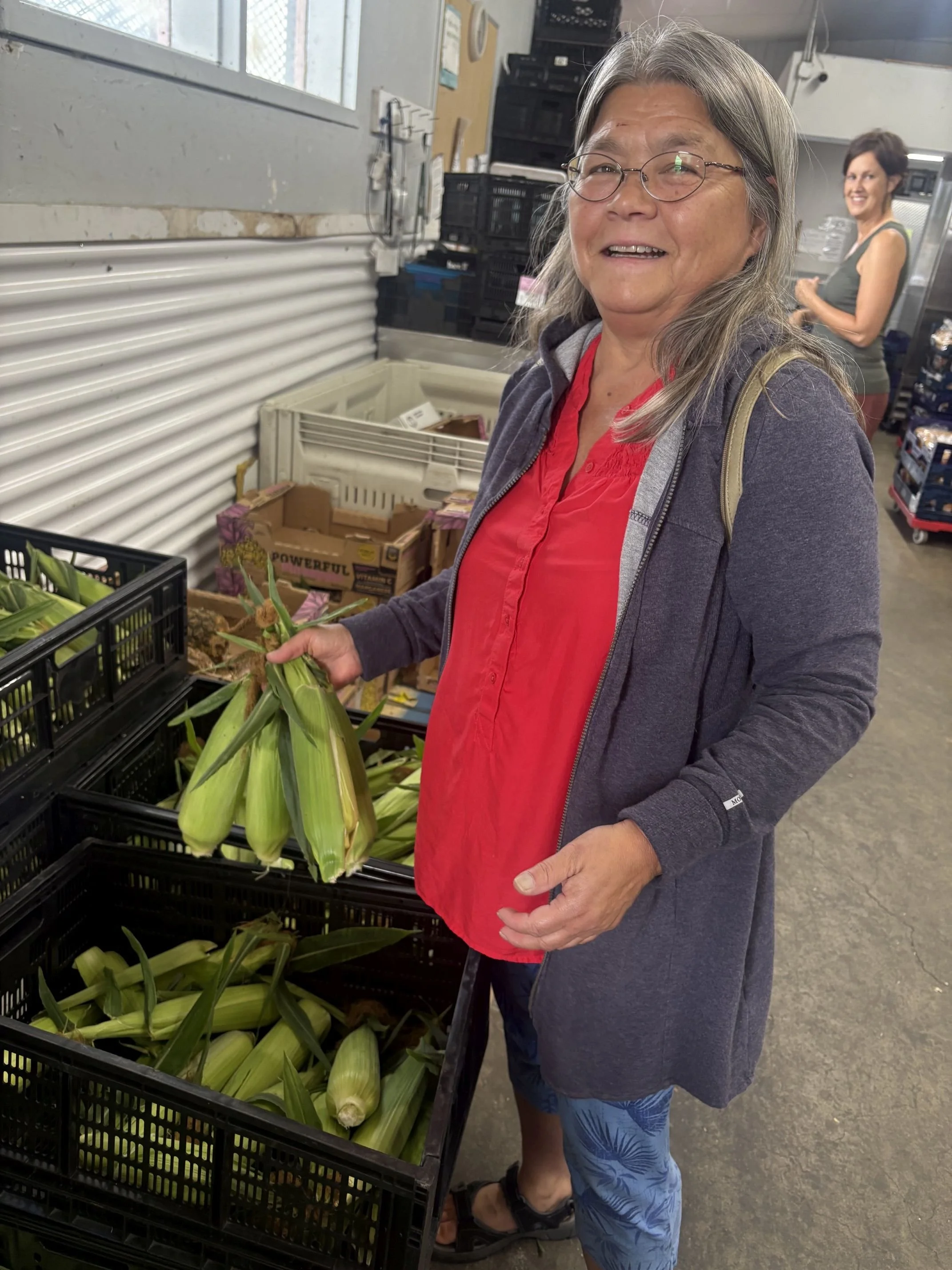
Merry Byrum, of Mount Vernon, picks up fresh, local sweet corn at Skagit Gleaners recently. Byrum has been coming to the market for 15 years and loves shopping for fresh, local produce there. Photo: Tahlia Honea
The shoppers are at Skagit Gleaners, a non-profit cooperative organization, which gathers food that would otherwise go to the landfill. The sources vary from backyard gardens, local restaurants, distributors and grocers, to, of course, our local farmers. Members pay a small monthly “donation” of $39.50 and are asked to volunteer 3.5 hours per month to sustain the organization’s operation. In return, they are able to shop for free three times a week, averaging 40 lbs of groceries per visit.
“You could really live on food just from here,” said Shasta Roberts, a Big Lake mother of three, who was shopping on a recent Tuesday afternoon. She joined 11 years ago after buying a house and needing to save money. “I have teenagers, so it really, really helps.”
Her teens love coming to the market too, especially for the pastries gleaned from local coffee shops and given away next to the entrance. Some of her best finds over the years include lobster, lamb, crab, artisan bread and prepackaged salads from a restaurant that uses high-quality, local ingredients.
The market is mostly fresh fruits, vegetables, dairy, meat and a small section of prepackaged and household items, such as soap and sunscreen. Skagit Gleaners also has a free thrift shop with clothing and household goods. Members are allowed to shop in the “Gratitude Galleria” an unlimited amount of times. Between the market and the thrift store, 650 members saved $3.5 million in grocery and household goods costs last year.
Most shoppers start their grocery runs at Skagit Gleaners to see what’s available, then supplement at other stores.
“It’s a lifestyle change,” said Morgan Curry, the organization’s Executive Director of 8 years, and a frequent member shopper herself.
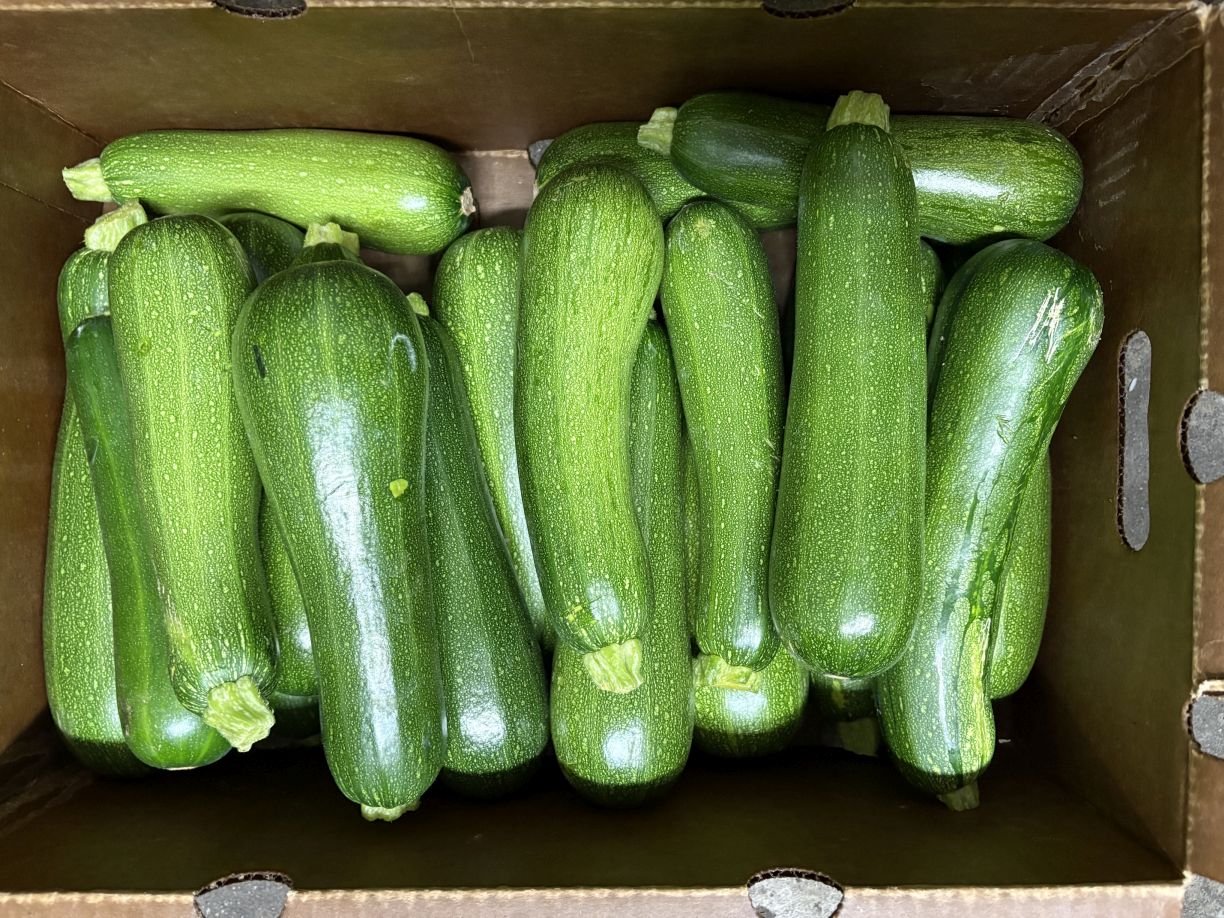
Fresh, local zucchini from Josh Farm delivered to Skagit Gleaners for the market later that day. Photo: Tahlia Honea
During her time as director, Curry has seen huge growth, both in memberships and donor participants. She spearheaded linking recently migrated families to Skagit Gleaners with a free year membership through local schools, and also helped build the hand-harvest program, in which members go to farm fields to gather unused produce to bring back to the market - a tradition spanning cultures for the past 2,000 years as a way to help those in need and bridge food disparity gaps.
Currently, Skagit Gleaners is in the middle of a 7-week long blueberry harvest at Bow Farmhouse, a 9-acre U-pick blueberry farm, just outside of Edison. Owner, Erin Slagg, has set aside more than two acres for gleaners to come and harvest, both to stock up their individual freezers and the market with fresh blueberries later that day. Gleaners are asked to set aside 10% of their pick for the Skagit Gleaner’s market.
Some farmers are hesitant to allow gleaners onto their property for various reasons, but Slagg feels it’s her calling, and is confident in both the Skagit Gleaner organization’s insurance and the individual gleaners’ personal responsibility to be respectful. She has gotten to know many of the gleaners personally over the years as they visit her farm and even helps with transportation from the parking area to the field.
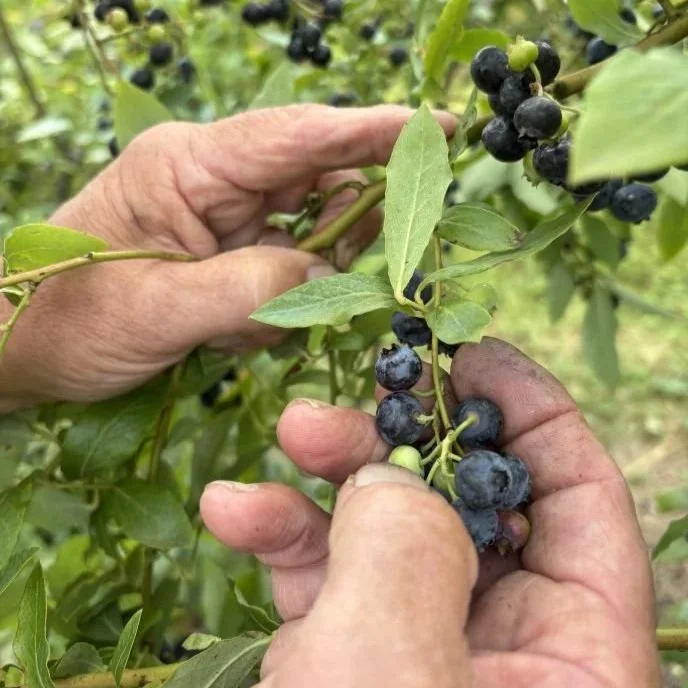
Skagit Gleaners pick blueberries at The Bow Farmhouse. The owner is driven by her faith to share her harvest with the community. Photo: Tahlia Honea
“My whole life is inspired by my faith and generosity,” she said during a recent gleaning session at the farm. “You’re given stuff to give.”
Slagg pointed out rows of ripe Rubel blueberries, meant for baking, and the larger Hardy Blues, which are great for snacking and smoothies.
A group of about 20 gleaners scattered among the rows, many of them children, picking the berries into large buckets slung around their necks.
As household costs have risen recently, more families are turning to alternative food sources to make their dollars stretch.
“It makes a huge difference,” said Brianna Lyon, a Fir Island mother of 9. She comes to the blueberry harvest every year with her children to stock up her freezer and is a regular gleaner. Her children love the blueberry harvesting and enthusiastically pick alongside her.
She’s taken home 70 lbs of fresh hatchery salmon from the market in a year, and relies on Skagit Gleaners for staples like chicken, eggs, milk and yogurt. She makes some of the dairy into cheese. Her families’ favorite treat is the chocolate Flax For Life muffins that are a frequent find.
Another gleaner, retiree Brian Petty, was picking blueberries as a volunteer. When asked why he spends his free time volunteering on the field instead of on a boat or some other recreational activity, he laughed and said, “Well, I did just buy a boat, but there is time for both, and this is very satisfying.”
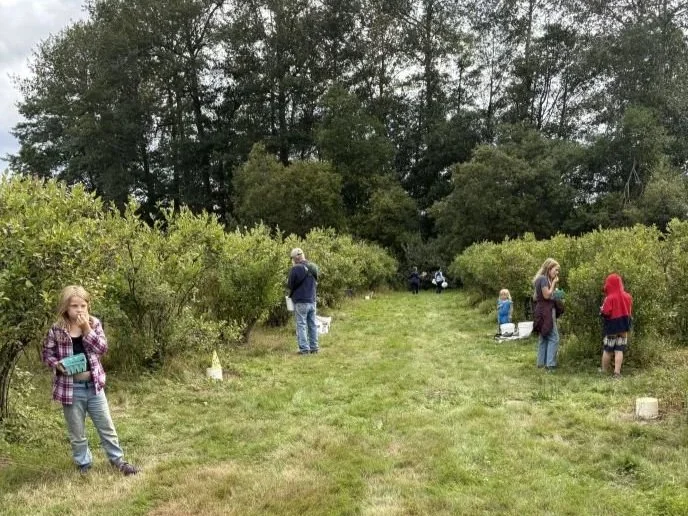
Skagit Gleaners pick blueberries recently during a seven-weeklong glean at The Bow Farmhouse, a blueberry farm near Edison.
The feeling of the glean was more like a family reunion than a work day with kids playing and picking and adults chatting and laughing while filling their buckets.
There is a saying around Skagit Gleaners, said LeAnn Baran, the Gleaning Coordinator for the organization, “I came for the food and stayed for the people.”
“There is something special about working alongside each other, connecting with food,” she said. “It’s really cool to have a part in how food gets to the store. A lot of hands had to make this happen.”
Baran has been instrumental in expanding the hand-harvest program, and is hoping it will keep growing in years to come. She is currently trying to expand to larger farms in the valley.
Back at the market, later that day, the packages of blueberries were a hot commodity, disappearing quickly into carts.
The shoppers vary from every walk of life, from a school superintendent to migrant workers. Others make just enough to not qualify for the food bank, but also are having a hard time making ends meet. A teen at the market picked up a broom and started sweeping to help out with her family.
“There is no hierarchy here,” Curry said. “Skagit Gleaners is for anyone who is frugal, waste conscious, and doesn’t want to see food go to the landfill.”
Any food not consumed by Skagit Gleaners, which is very little, Curry said, is composted or used as animal feed.
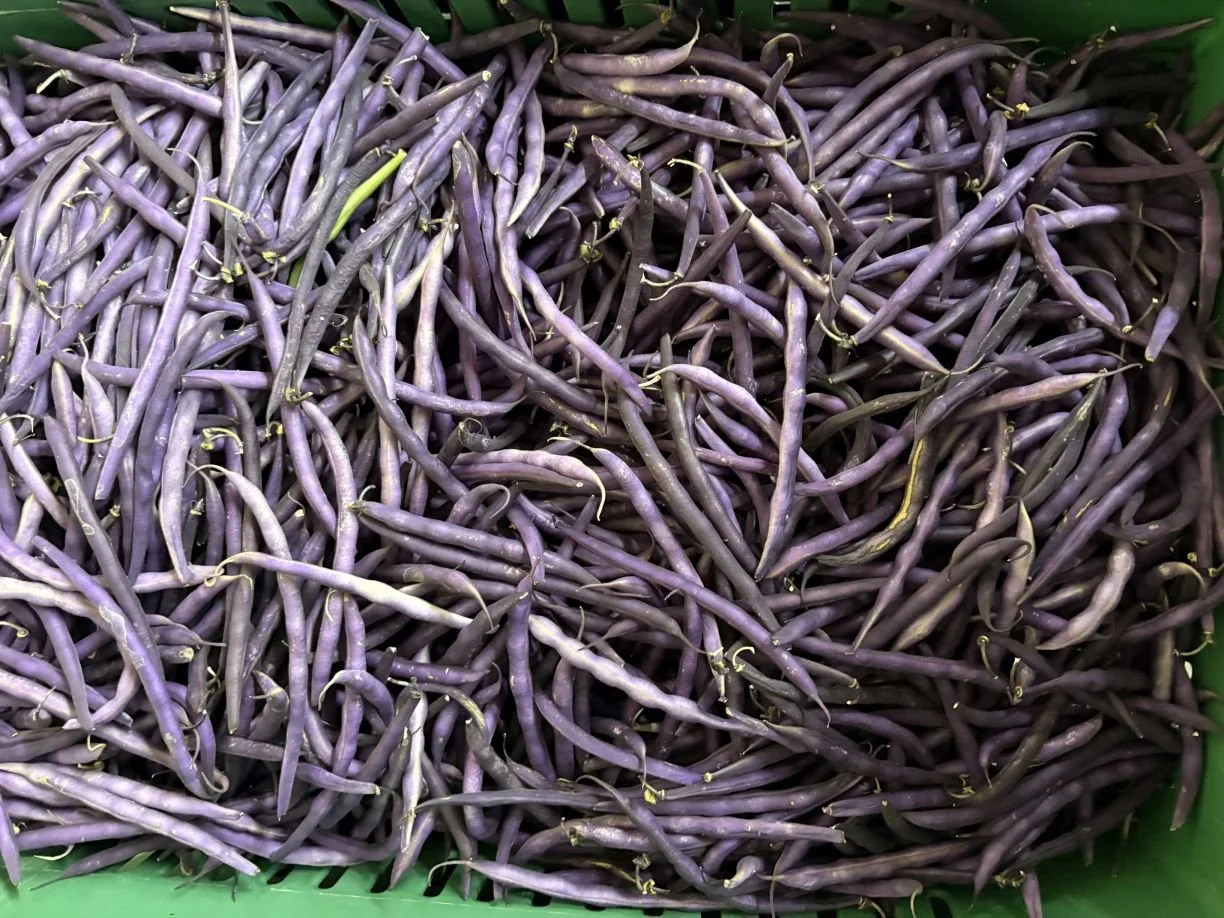
Fresh, local beans from Josh Farms waits to be put into the shelves at the Skagit Gleaners market later that day. Photo: Tahlia Honea
Many local farms are partnering with Skagit Gleaners on a regular basis. Hedlin’s Family Farm donates a variety of produce, and Skagit Gleaners also purchases supplemental food at market price from Hedlin’s and Treehouse Produce. Hayton Farms donates beautiful strawberries, raspberries, blackberries and more. Skagit Gleaners received several grants earmarked to buy from small incubator farms in the Viva Farms program, such as Mizpa Farms, Josh Farms, which also donates, and Mejia Romero Farm, which provides culturally relevant foods for the immigrant community here. Foothill Farms will also participate in the gleaning program this year.
Curry is also constantly looking for new grants and bulk deals with organizations designed to capture excess food, such as a semi-truck load of watermelon for $90 a pallet.
“We’re a frugal bunch of people, and that goes for the entire organization,” Curry said. “We operate on a shoestring budget.”
In all, Skagit Gleaners saved 2.2 million pounds of food from the landfill last year and served more than 600 local families.
For more information about Skagit Gleaners, visit https://www.skagitgleaners.org/
Story and images by Tahlia Honea. info@skagitonians.org