
Growing Community Upriver at Long Hearing Farm
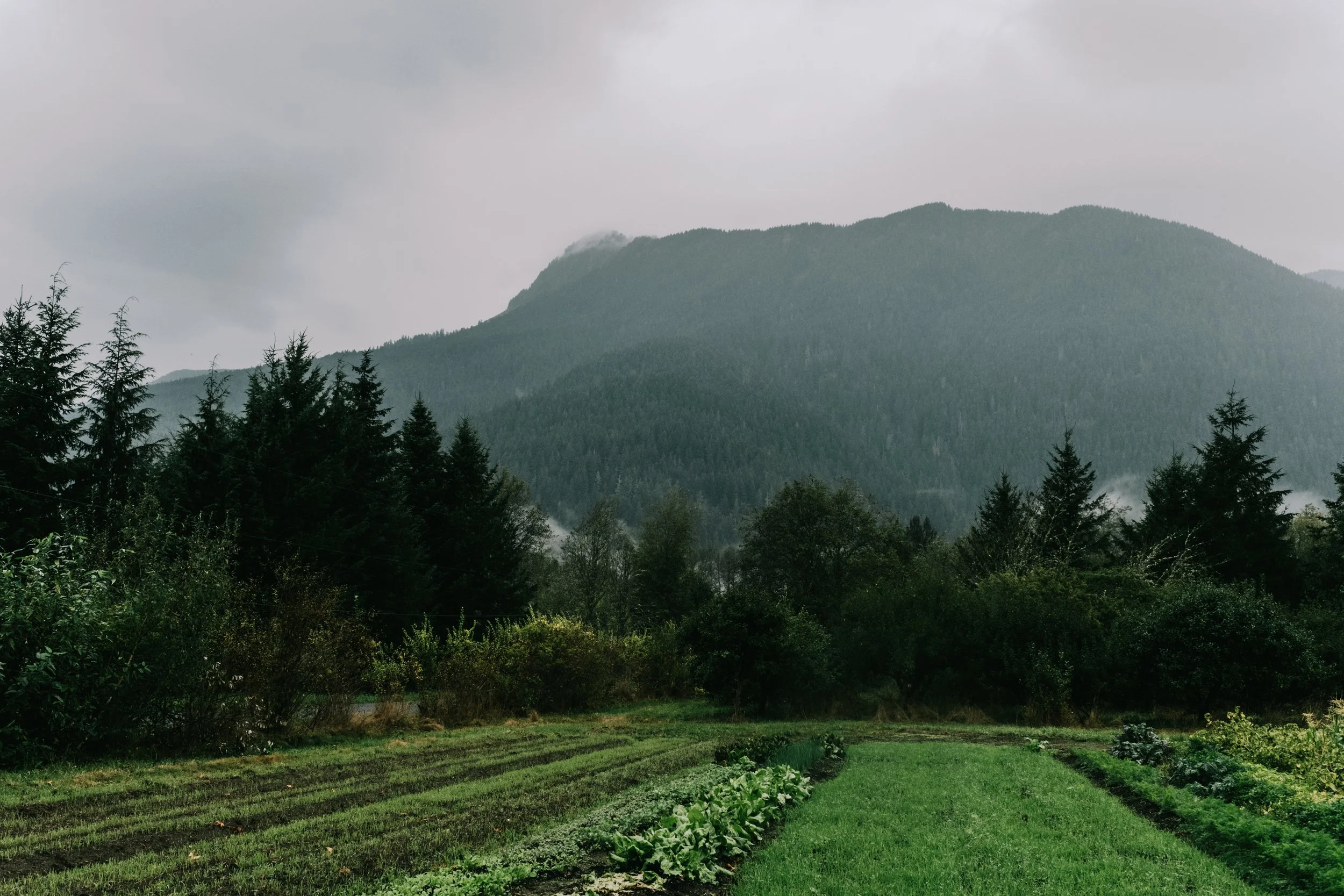
Long Hearing Farm. Photo: Kirsch Creative
Some Skagit farmers are born into it; others take a circuitous route but find a home here, nonetheless. Elizabeth Bragg and Kelly Skillingstead of Long Hearing Farm are of the latter group.
Standing next to the Skagit River with Sauk Mountain above and illuminated by rare winter sunshine, Elizabeth looks into the future. “I would love to have the security to make plans that we might not see the fruits of for 30 years,” she says. “That’s really important to me.”
This rootedness in place and focus on long-term, sustainable success defines much of what Long Hearing Farm is building, and it makes the farm a valuable part of the Skagit agricultural landscape, especially upriver in its Rockport location.
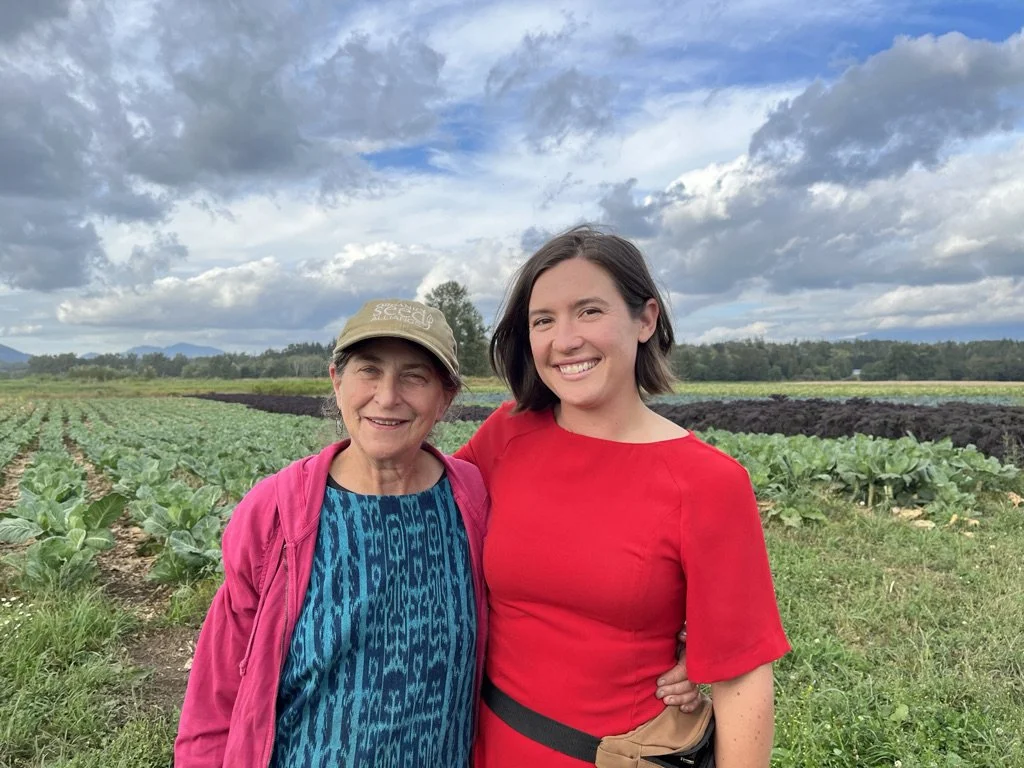
Anne Schwartz and Elizabeth Bragg. Photo: Long Hearing Farm
Born in Tacoma, Elizabeth moved around the I-5 corridor as a child, ended up in Massachusetts for high school, returned to Washington for college, before discovering a calling for farming in London. While studying law and global development and managing a cafe abroad, Elizabeth heard from a coworker about a farm supporting food sovereignty—the very topic of her own research.
She returned home to be near a dying grandparent and started working at River Run Farm, an organic farm in Sequim. When Elizabeth was looking to relocate to the Skagit area—her partner is from Darrington—she kept hearing the name Anne Schwartz, the longtime operator of Blue Heron Farm and advocate for sustainable farming. Anne invited Elizabeth to come work. At the end of that 2018 season, “at a picnic table under the shade of autumn foliage,” Elizabeth remembers, Anne sat her crew down and informed them she’d be scaling back. Anne offered support if anyone wanted to pick up some of what she was letting go.
“I didn’t plan on this being my next step for my farming journey,” Elizabeth says, “but why not? Let’s try.”
Elizabeth had help. Kelly is her business partner and the other worker-owner at Long Hearing Farm. They met at Western Washington University, where they worked on different AmeriCorps projects while sharing an office. With interests and experience in community organizing and educational access, Elizabeth and Kelly bonded over shared values, including a focus on food and community. Anne’s choice to scale back gave them a chance to take a leap.
From the beginning, Elizabeth’s partner Reed Rankin has also been part of the mix. Emily Smaldone and Ben Stamats joined soon after, rounding out the team. Plans are underway to make them all worker-owners by the end of next year.
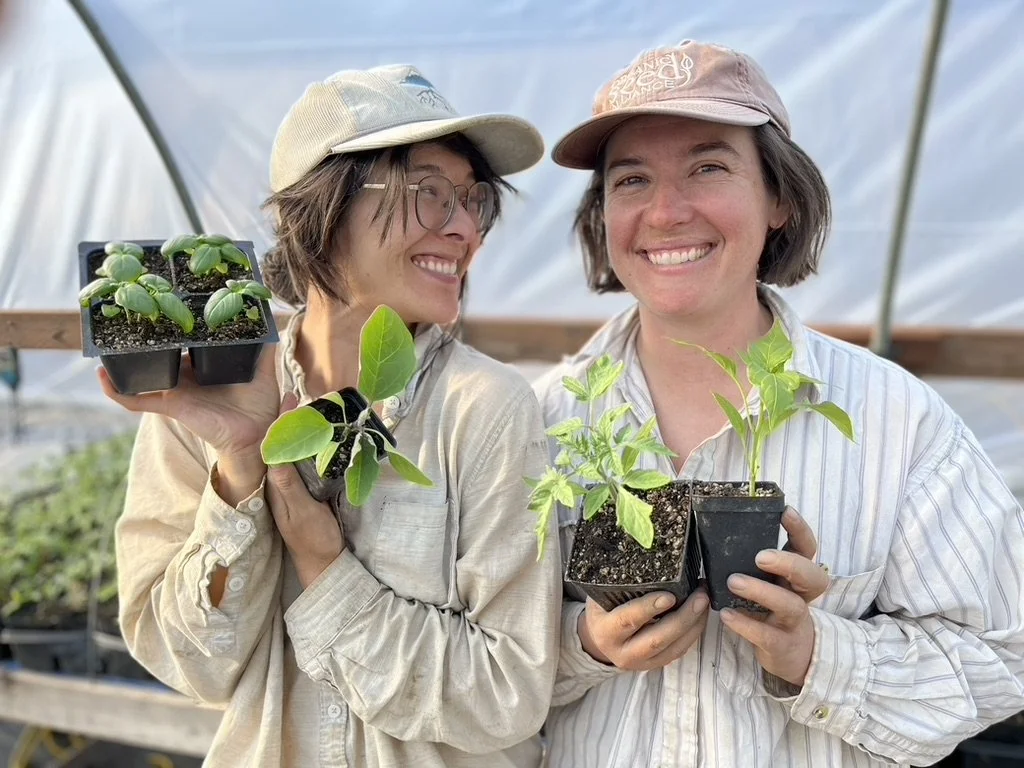
Kelly Skillingstead and Elizabeth Bragg. Photo: Long Hearing Farm
A shared ease is evident among this core group. They answer each other’s questions and finish each other’s sentences while taking a short break between tasks. This is the result of years of working together in a democratically-run, consensus-based operation, an approach that can take several different forms.
For example, they collectively develop a “No List” every season. Arugula recently made the “No List.” A key ingredient in some of their salad mixes, they took the risky step to exclude this brassica from their crop rotation due to pest concerns. Creating salad mixes each summer requires extra preparation during the busiest part of their summer season, increasing stress on the team. When flea beetles hit their arugula and spicy salad mix hard, they decided as a group that it was a “No,” a decision that reduced stress and protected their quality of life while they work on solving the problem. Elizabeth was “really, really nervous,” because arugula was the farm’s best-selling item. They shifted to other salad mixes and added different crops to achieve the balance they value and protect.
None of this approach is accidental. Long Hearing Farm is organized from specific commitments. They describe their enterprise as a rural workers’ cooperative and certified organic farm. As such, broad values guide them.
Elizabeth and Kelly feel a strong connection to their ancestors. Both have mixed heritage: Elizabeth’s includes Blackfeet, Gros Ventre, Eastern Band Cherokee, and European American, while Kelly’s is Japanese and European American. Their families arrived and moved through this region in complicated ways. Elizabeth’s ancestor and the farm’s namesake, Long Hearing Woman, lived through a period of extraordinary violence and hardship yet managed to survive with a spirit so cheerful she was known as Peaches. Together, Elizabeth and Kelly envision Long Hearing Farm as part of a healing process for people and place.
Part of this is stewarding the land. When Elizabeth first started farming, her mentor told her, “You can’t grow food until you grow your soil.” It’s a lesson that requires persistence. They’ve planted cover crops and adopted low- or no-till practices to limit disruption to the soil biology. Elizabeth insists they aren’t dogmatic about it, and every year they adjust the practices to suit their evolving needs.
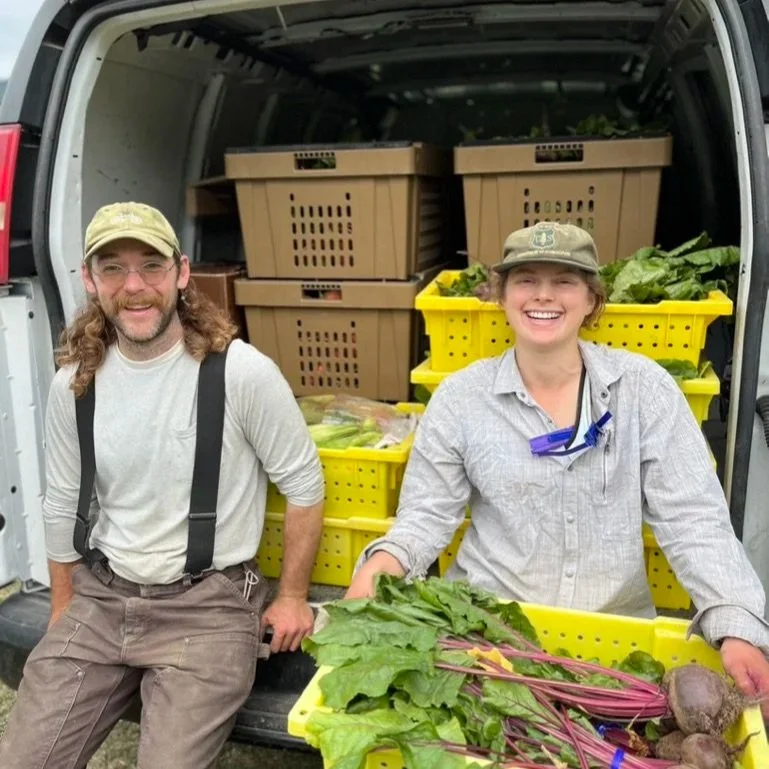
Ben Stamats and Emily Smaldone. Photo: Long Hearing Farm.
As an upriver farm, they struggle at times with the elk, which recently targeted one of their fields consuming thousands of dollars of produce and trampling cover crops. But Elizabeth takes a philosophical view that “there’s room for everybody.” She knows the farm provides benefits to the ecosystem, creating a “biodiverse pocket” here—but plans to construct a stronger fence, too. She also has received and used a damage permit from Washington Department of Fish and Wildlife to hunt elk, finding in that activity a fulfilling way to reconnect with Blackfeet practices.
When they formed Long Hearing Farm, Elizabeth and Kelly started modestly. They leased one acre and inherited from Anne 35 community supported agriculture (CSA), or farmshare, members. Since starting in 2019—“a wild time to start a farm,” says Elizabeth—those farmshare members have increased 200%, and now Long Hearing Farm is producing on six acres. The last four seasons have seen their business increase by 10% to 20% in gross sales annually.
Community is key, though, even above some economic decisions. “We’re always trying to find a balance between making enough money to pay ourselves and also feeding the people that we care about,” says Elizabeth.
They know they could drive their CSAs to Seattle and charge more, but “we would rather feed our neighbors,” says Emily, who has worked at Long Hearing Farm since 2021.
Most of the CSA members live upriver, something everyone at the farm is proud of because of their commitment to local communities. They have drop sites for their main 20-week CSA in Darrington, Marblemount, Rockport, Concrete, and Sedro-Woolley.
Besides making it convenient through these many locations, Long Hearing Farm also offers the farmshares on a sliding scale, from $460 to $1000 and allow both payment plans and EBT.
They also work with a variety of local community groups and school districts, building those relationships to help feed their neighbors. Long Hearing Farm is a community resource, and they are always asking people how they can contribute. They host annual visits from Western Washington University’s Native American Student Union. Students harvest rosehips or nettles, depending on the season, and share a meal beside the Skagit River, the only river in the continental United States still home to five salmon species. It’s a grounding experience that connects students to the land in powerful ways.
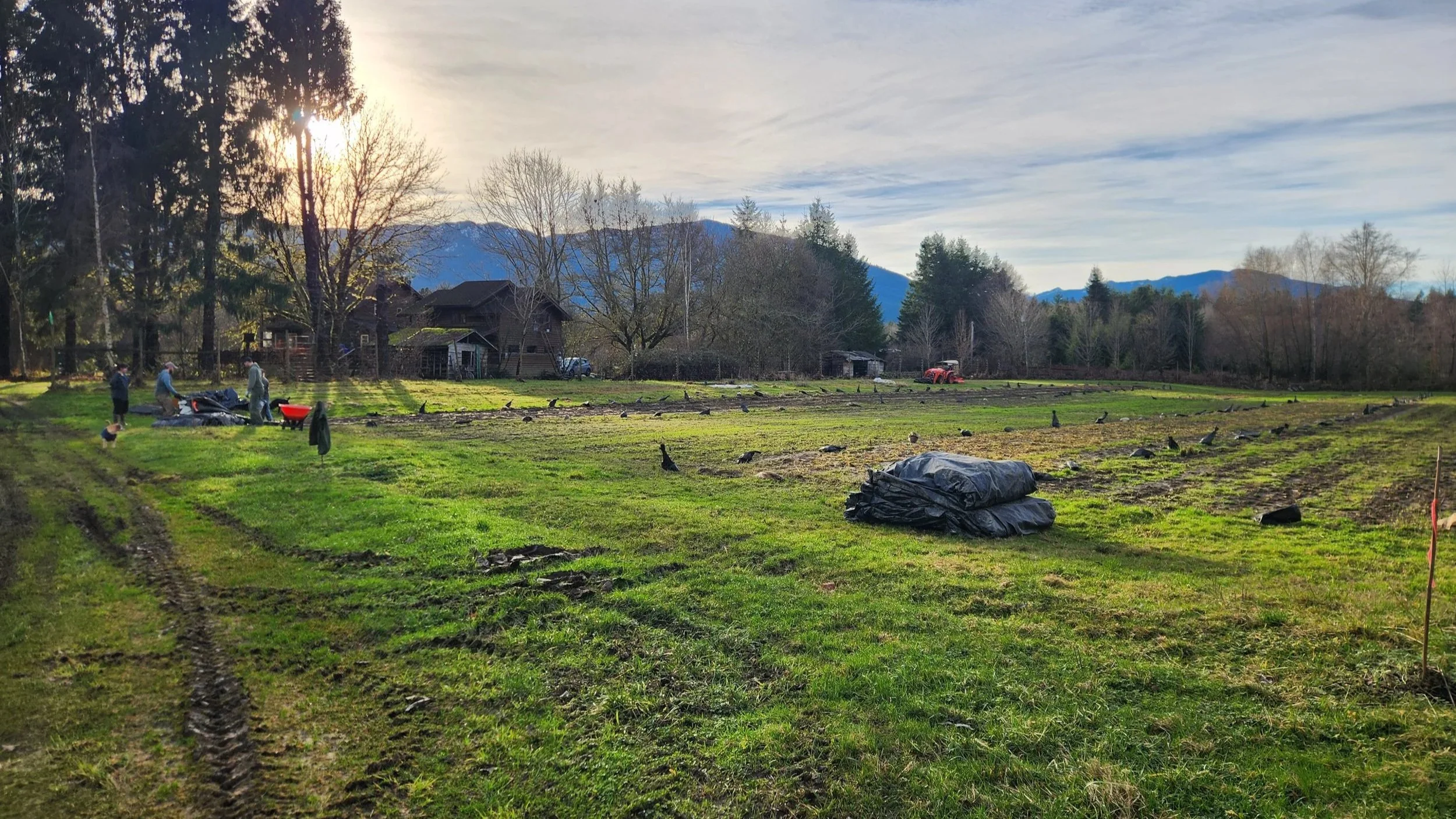
Long Hearing Farm in January, 2026. Photo: Adam Sowards
The business and farm are always evolving, with their articulated values pointing the way. Around one-third of their income comes from the CSA and the rest comes from wholesale, split mainly between Skagit Valley Food Co-op and outlets in the Methow Valley. Long Hearing Farm works to maintain those relationships and is eager to keep growing. Everyone at the farm works off-farm jobs—a reality for the vast majority of farmers—but they look forward to a time when it might support them all while continuing to feed their neighbors and steward the land.
Back at the river, Elizabeth reflects on the inheritance she stumbled into through Anne’s generosity. “Anne is such a passionate advocate for sustainable agriculture, and I feel so honored that we get to continue her legacy, hopefully, until we’re ready to pass it on to the next generation,” Elizabeth says, her voice cracking with emotion. “I’d be so proud to be able to do that.”
Story by Adam Sowards: info@skagitonians.org