
Double O Ranch: A Family Legacy in Raising Cattle
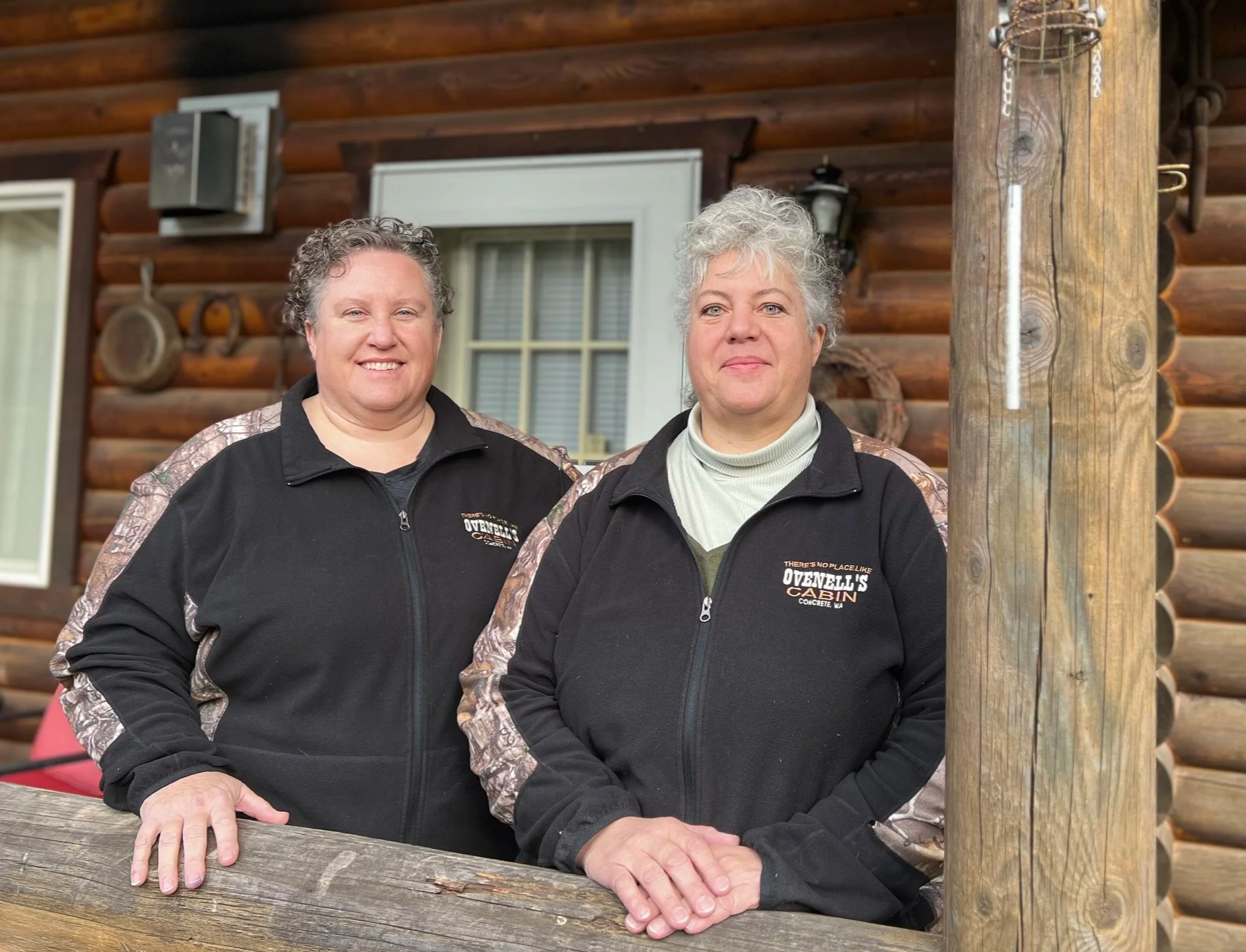
Cindy Ovenell Kleinhuizen and Kris Ovenell Hansen of Double O Ranch. Photo: Bryony Angell
Growing up, the five daughters of Norman and Eleanor Ovenell worked alongside their parents on the 584-acre Double O Cattle Ranch, on a beautiful stretch of the Skagit River opposite the town of Concrete.
Co-owner Cindy Ovenell Kleinhuizen recalls a particularly memorable farm-family task from when she was seven years old: “Dad would put the truck in gear and then hop in the truck bed. I would steer while he threw hay bales out to the cows.”
At age eight, Kleinhuizen and her sisters Katherine, Kristin, Karin and Helen began raising and showing heifers and steers for 4H at regional fairs. Tracking when and how much they fed their livestock taught the girls how to raise cattle for profit. “Once we were all in 4H, we had anywhere from 20 to 25 head of cattle at the fair, five for each of us,” says Kleinhuizen. Their sales built their college funds.
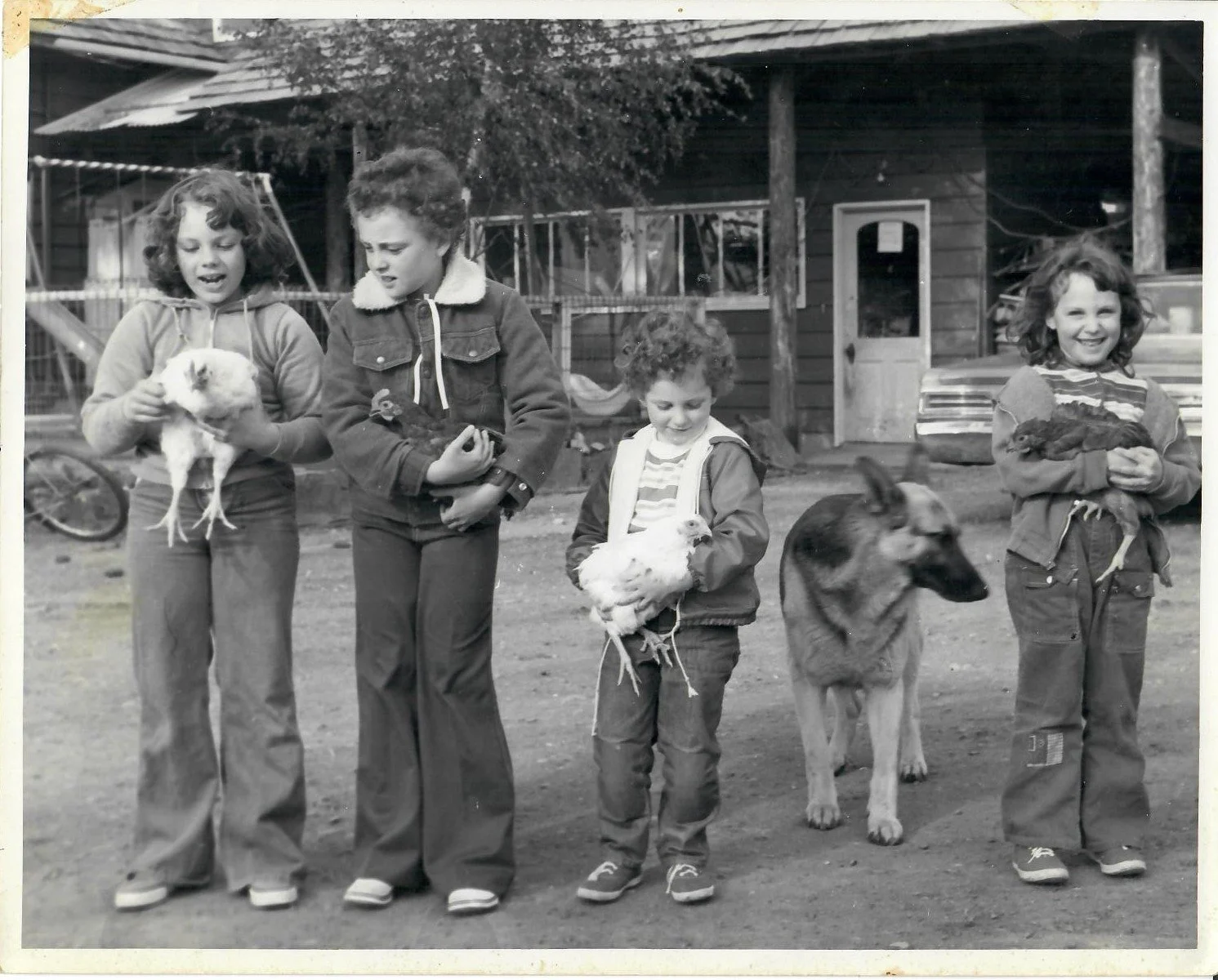
The Ovenell sisters circa 1977, L to R: Kris, Kathy, Karen and Cindy. Not pictured, Helen.
By high school, they could deliver calves, rake and buck hay, drive trucks with the crew, and help their mother, Eleanor (“the commander in chief” to her girls) feed the crew.
They also fed cows, mended fences, and checked pregnant cows during calving season. Twice a year the sisters rounded up cows on horseback to move them up to the barn for vaccinations, pregnancy testing, and branding. “They were long, fun, hard days,” says Kleinhuizen. “We had no time to get into trouble.”
“Life was easy then,” says Double O co-owner Kris Ovenell Hansen. “If somebody needed something, they hollered. If you needed to know something, you might find out tomorrow or next week—or you could listen into the party line phone!”
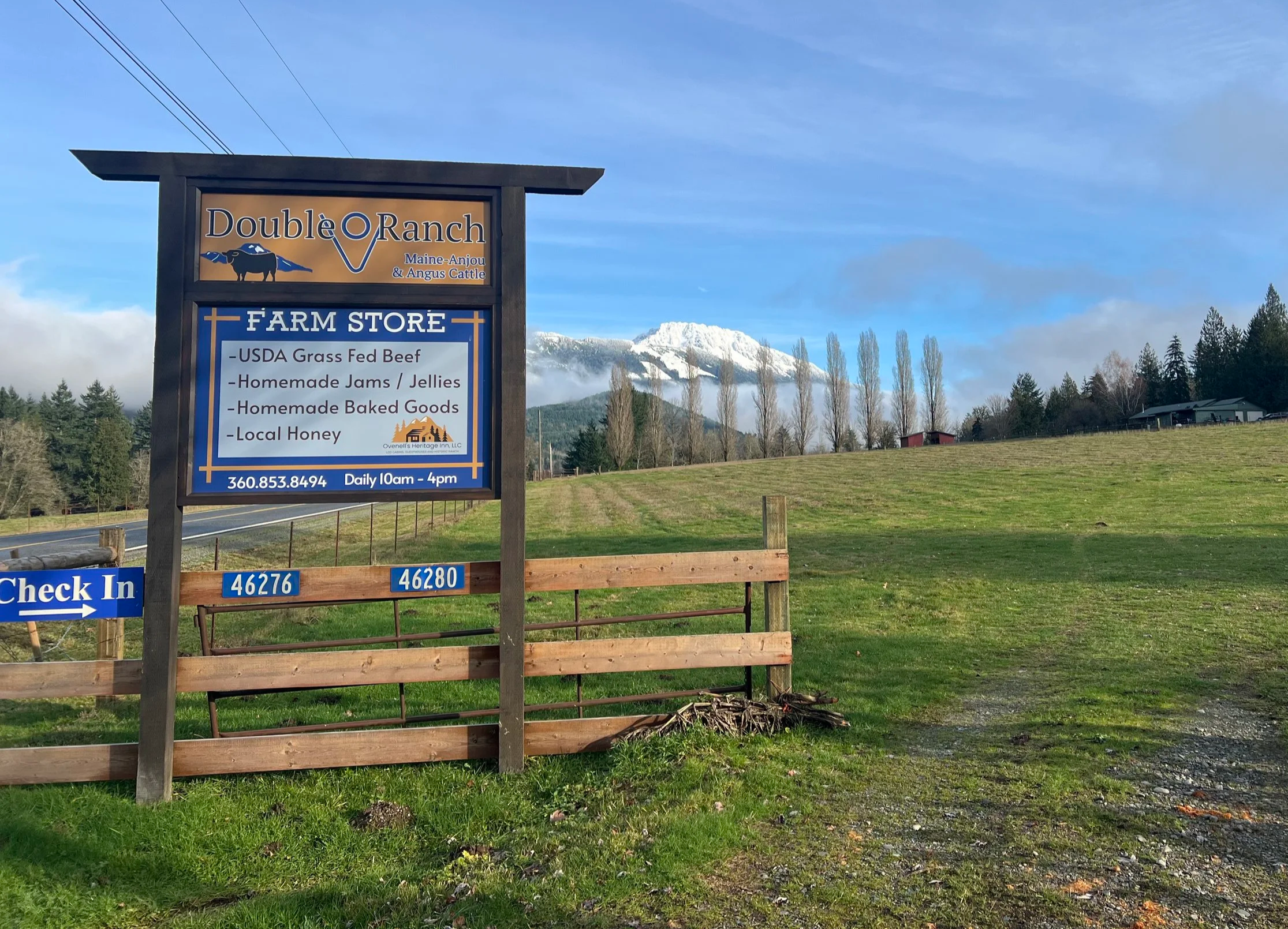
The spectacular setting of Double O Ranch. Photo: Bryony Angell
Life is still slower on the Double O Ranch, and it’s not just cattle who relax. Guests enjoy the spectacular view of Mount Baker and Sauk Mountain from the rustic log cabins of the Ovenell family’s other business, Ovenell’s Heritage Inn.
When Norm and Eleanor Ovenell thought the family needed another income source, they secured a special-use permit from the county and opened a Bed and Breakfast inside the family home in 1997. Over the next 15 years, the family constructed four small log guest cabins and remodeled three guest houses along the river.
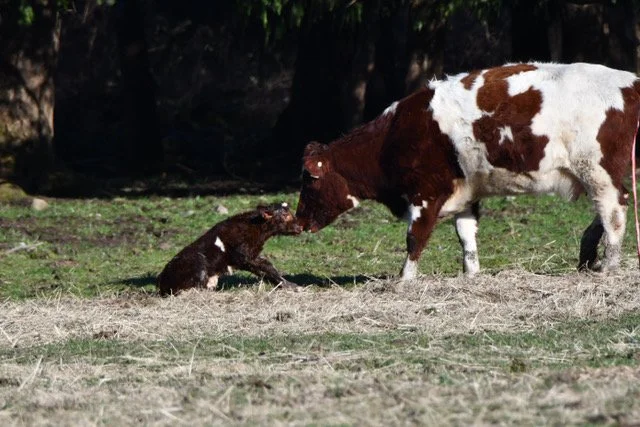
Newborn calf on the Double O Ranch. Photo: courtesy of Cindy Kleinhuizen
Many guests come back year after year, especially for the sixty-day spring calving season, when as many as nine calves might be born daily. “Watching a calf stand up and take its first few steps is amazing,” says Hansen.
Hansen oversees inn guests; Kleinhuizen and husband Jason, who began working for the Ovenell family in high school, oversee the herd. “We liked cows so much, we bought the herd when dad died,” says Kleinhuizen.
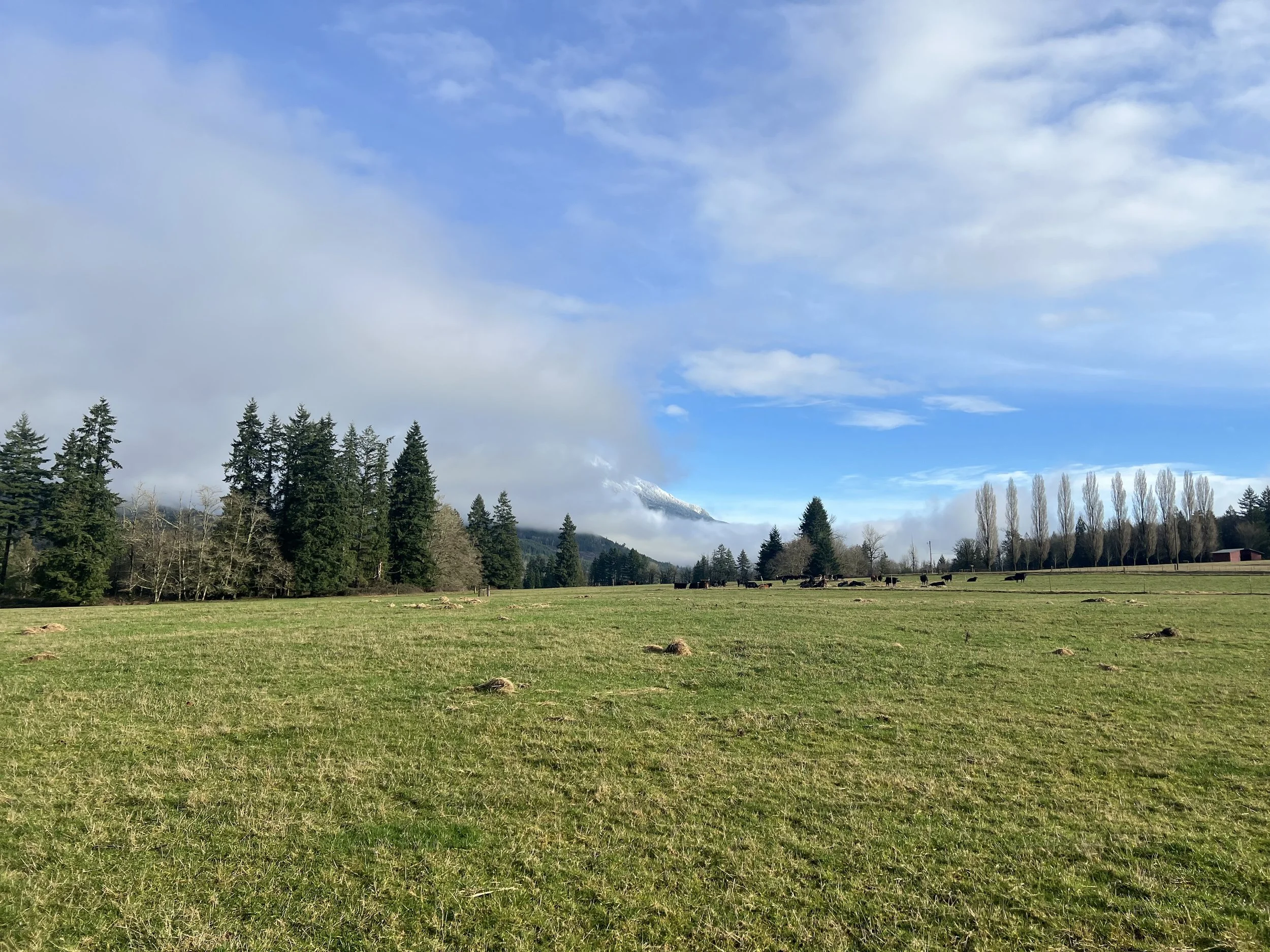
Double O fields, looking east. Photo: Bryony Angell
Their chores haven’t changed much since. The couple cares for the cattle side by side, and Jason builds and mends fences and buildings.
Horseback roundups are no more. “It takes as long to catch and saddle the horse as it does to do the work, so we use ATVs and trucks now,” says Kleinhuizen.
The secret to good beef? Genetics and diet. Double O Ranch raises Maine-Anjou cattle, whose calves weigh between 60 and 105 pounds at birth. Cows weigh up to two thousand pounds at maturity, and bulls up to 2500 pounds.
Big animals eat a lot. The herd can eat its way through five or six 1200-pound white bales of haylage every day in winter. The loose supplement that supplies selenium, an important mineral for cattle health, is purchased four tons at a time.
Crop farmers on the Skagit flats need equipment dealers and mechanics plus agronomists to fine-tune fertilizers. Cattle ranchers need large-animal veterinarians who can respond to animal injuries and illness, to a cow having trouble calving, and to vaccinate cattle against Brucellosis, a contagious bovine infection. They need auction houses where they can sell animals to buyers, and USDA-compliant processors to butcher meat so it can be sold to the public.
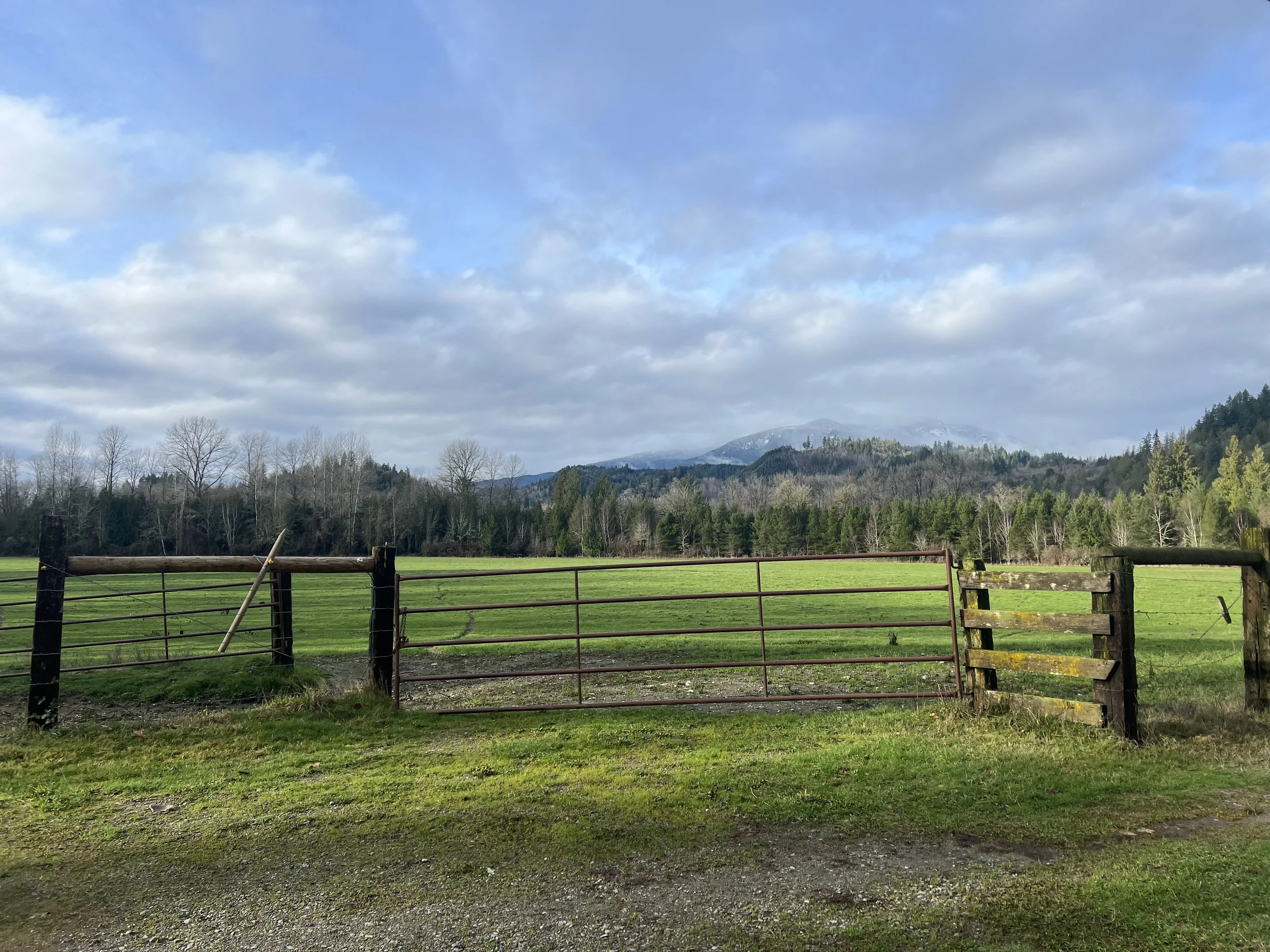
Double O fields, looking northwest. Photo: Bryony Angell
Nestled outside the town of Concrete, Double O Ranch is many miles from these services. Large-animal vets at Puget Sound Veterinary Group practice in Mount Vernon, 36 miles away. The closest auction house is in Whatcom County. While the growing network of USDA-compliant local meat processing facilities includes Del Fox Custom Meats and Schenk Packing Company, they too, are 40 to 50 miles away.
Distance isn’t the only constraint. Wildlife plays a part in the challenges ranchers face, too. The local North Cascades elk population forages on agricultural land in large numbers, damaging fencing and trampling and consuming pasture intended for livestock. Cooperative fencing and an increase in elk hunting permits are two methods, among others, rolled out since 2015, to mitigate elk pressure on ag land.
Then there’s the weather: With 71 inches of rainfall a year in Concrete, water-saturated pasture can also be tough on birthing cows and newborn calves. Rain means cold, wet weather and lots of mud. Cows are outdoors year-round, and calves are born in the mud (unless it's snowing and the ground is frozen). “Muddy ground harbors more bacteria and viruses. Cold, wet conditions make it easier for cattle to pick up those bacteria and viruses, which can cause respiratory illness and scour, issues that can lead to serious sickness or death,” says Kleinhuizen.
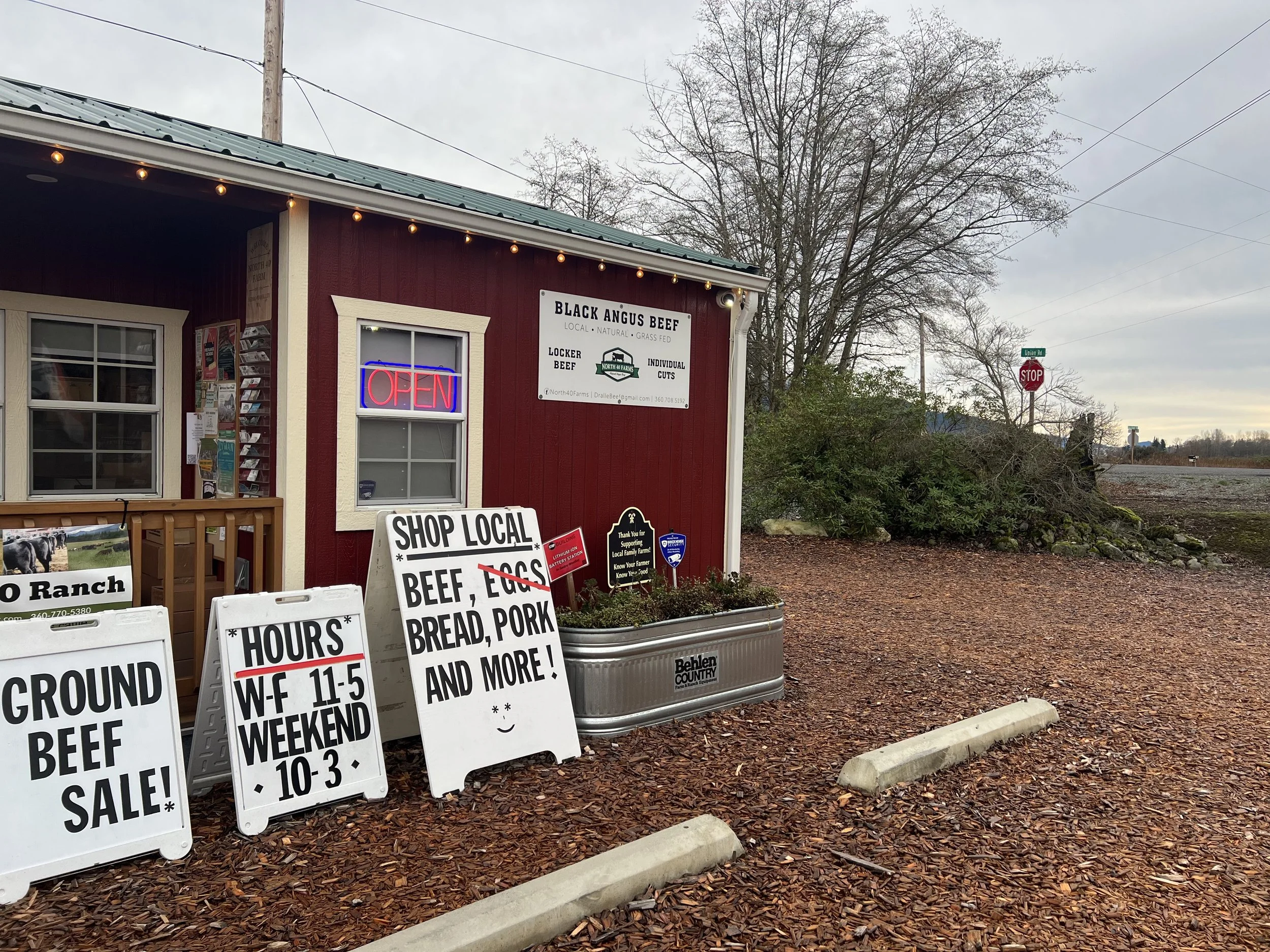
The North 40 Farm Store on F&S Grade Road outside of Sedro Woolley. Photo: Bryony Angell
After decades of selling cattle through auction barns and by the whole or half to private buyers, Double O now focuses on selling finished beef cuts locally. They supply hamburger meat to Hub Bar and Grill on Concrete’s historic Main Street, and to the Concrete School District’s Farm to School program. Most recently, Jason and Cindy Kleinhuizen bought the North 40 Farm Store on F&S Grade Road near Sedro Woolley, which sells the full range of Double O Ranch’s USDA-inspected meat cuts.

One of the half dozen cabins and guest houses that are part of the Ovenell Heritage Inn and Cabins on the Double O property. Photo: Bryony Angell
The 1500 guests who stay at Ovenell’s Heritage Inn each year are a strong market for Double O’s meat. So are the 700-plus visitors who participate in the Skagit Festival of Family Farms. As festival visitors enjoy the gorgeous setting, they eat barbequed beef and fries on the lawn, take a hayride through the fields and woods, listen to live music, and purchase 950 to 1000 pounds of beef in two days. “Folks say it’s the best beef they’ve ever had,” says Kleinhuizen.
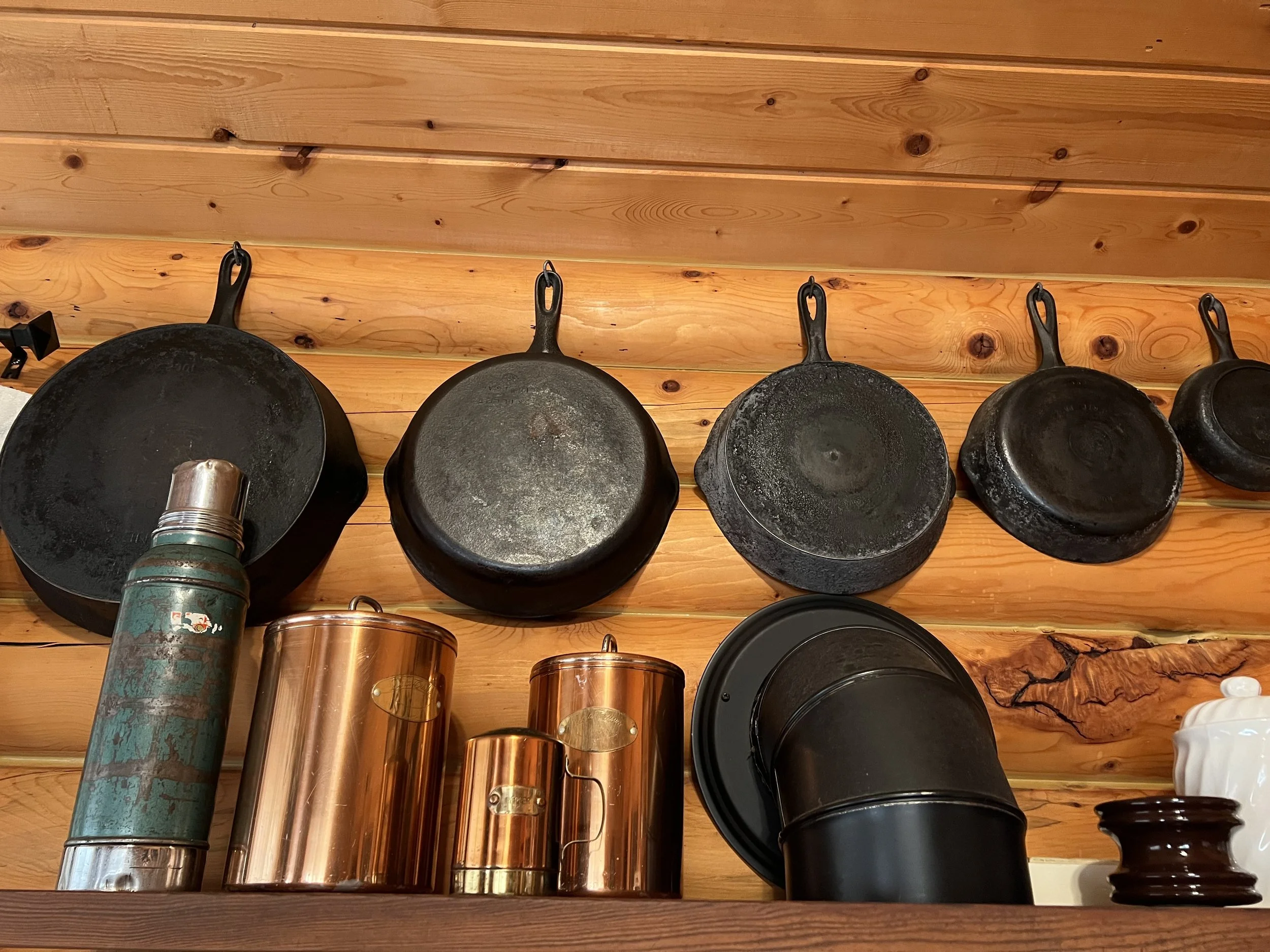
Norm Ovenell’s vintage thermos sits on the shelf above the stove in the Foreman guest cabin on the Double O Ranch property. Photo: Bryony Angell
“People like knowing where their food comes from,” says Hansen, “but there’s lots of misinformation about how beef is raised.” At the Festival, educational displays and the Sedro-Woolley FFA petting farm help visitors understand the cycle of life on the ranch.
There are hundreds of thousands of cow-calf farms and ranches across the US. Found in all 50 states, most are family-owned. Many of the calves born on those ranches will change hands and ownership as they grow into mature cattle. Double O keeps their cattle on the farm for the entire life cycle, offering something special. They steward their land and forests for the health of livestock, wildlife, and people. Cattle graze on lush grass and high-quality hay. Calves are vaccinated to resist specific viruses, and antibiotics are given only when needed. No hormones are used.
The Kleinhuizens and Hansen take pride in providing wholesome, natural beef for the region—and in carrying on the legacy of their parents.
“It’s in your blood. You’re born into it,” says Kleinhuizen. “I could retire and watch the world go by, but you keep working. And it’s amazing to continue something started generations ago and stick to those family values.”
Story by Anne Basye: info@skagitonians.org