
Securing a Legacy Through Careful Succession Planning
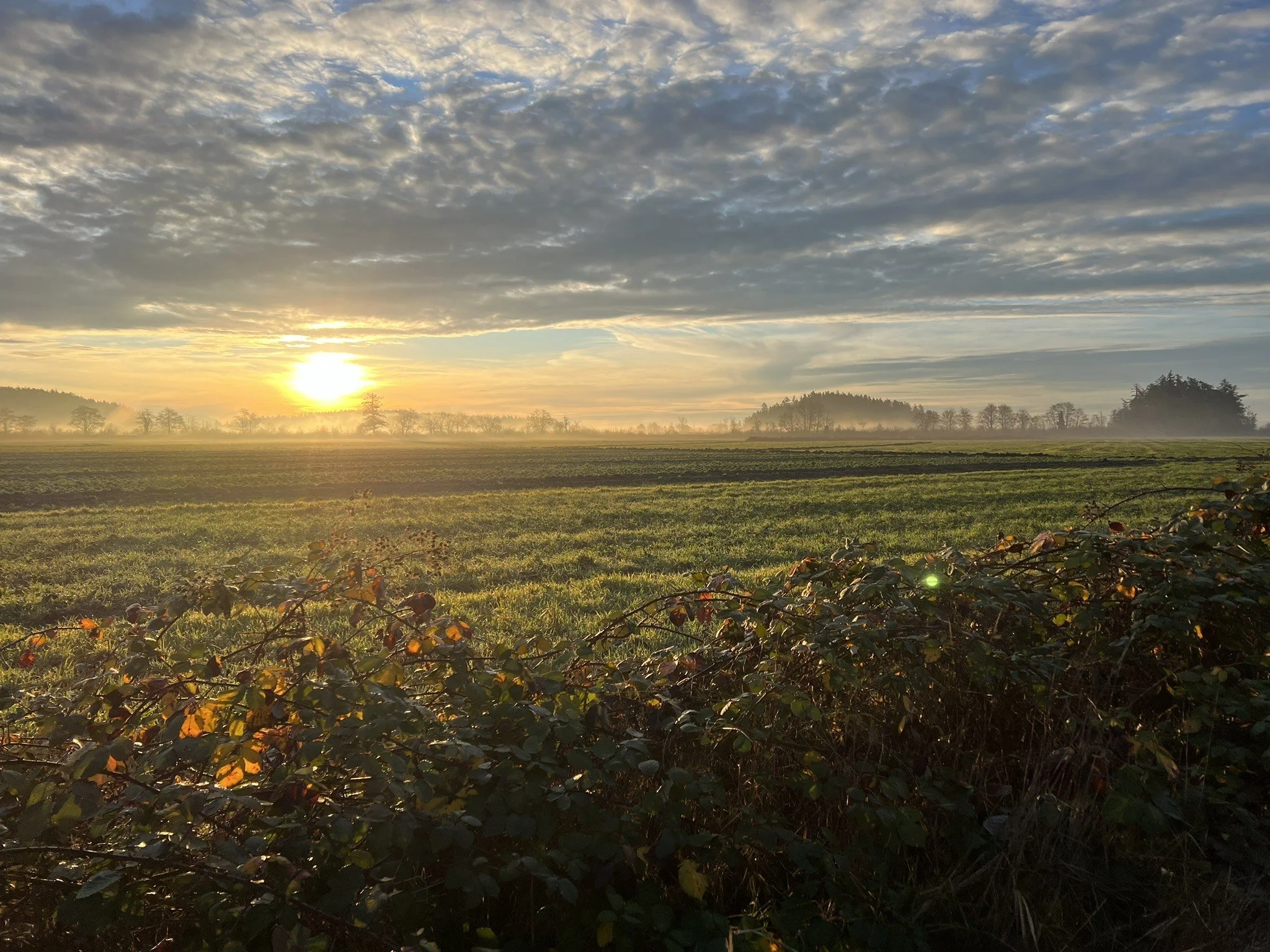
Photo: Bryony Angell
To protect privacy, this story uses no names, identifying information, or direct quotations.
Whether a farm produces from a single acre or a thousand, whether the person farming it is in the first or the fifth generation of Skagit growers, passing the farm along is about continuing a legacy that means far more than simple names attached to a deed. These transitions from one generation to the next, one farmer to another, contain moments of vulnerability for the land itself and the people who are attached to it.
Skagitonians to Preserve Farmland is committed to supporting local farmers as they work to ensure a rich agricultural legacy stays here for many more generations. It is at the heart of SPF’s mission, and we are eager to share resources helpful to the succession process.
The demographics of agriculture are aging, and that means farms will change hands rapidly. In Washington State, the average age of farmers is more than 58 years; in Skagit County, 42% of producers are 65 or older. Experts expect one-third of the state’s farms will change hands by 2040. Farmland is most vulnerable to development during these ownership transitions, which is why succession planning is so critical. To keep Skagit farmland productive and maintain its legacy, current farmers have to plan carefully and work creatively with new generations seeking to carry that legacy forward.
Farmers working the land today have invested a lifetime of labor and memories into the soil. Some farmers also carry with them the legacy of several generations who preceded them. The best farmers know they are only caretakers, becoming the best stewards they can be of the land.
Farmers also deserve to retire comfortably and new generations deserve their chance, too. Navigating that transition can be challenging.
Sometimes the past seems simpler. A successful family farm grew over time and was passed down to the next generation that kept growing and improving the operation. Perhaps a family could opportunistically buy out a neighbor who had no heirs. But today’s high land values, capital requirements, and small margins make it hard to pick up farming from the retiring generation whether you are in the family or not. To shape the future positively, farmers today must come together and start their succession planning. Unfortunately, the vast majority of farms do not have a succession plan in place.
This winter the Skagit County Farmland Legacy Program along with Western Washington Agricultural Association and WSU Extension, are sponsoring “Your Farm’s Future,” a series of three workshops where experts, including experienced farmers, share insights and available resources.
The first workshop was held on December 3 and included Skagit farmers sharing on the topic “Understanding the Journey.” On January 14, the theme is “Planning the Transition” and February 18 is “Moving Forward.” The entire series is meant to prompt careful consideration and action so that today’s farmers move their legacy forward.
More information is available here.
Legacies take many forms. Some farms pass within families and being certain that siblings or cousins receive fair treatment is a priority. Some farms focus on particular practices, say organic growing, and it is important that a new operator shares that mission. To define that legacy and share that intention with others is a critical early step. There is no such thing as starting too soon.
Because a farm’s land and the farm’s business can be distinct and held in numerous entangled arrangements, it can become especially difficult to disentangle. Doing so requires creativity and patience, something anyone familiar with succession planning will confirm. The economic realities that constrain farming in Skagit—the high price of land, the small margins on crops, or inheritance taxes, for example—make the process especially difficult. Sorting out intentions and options with the necessary creativity and patience comes a lot easier when you are not facing an emergency or a worst-case scenario of a farm owner passing without a succession plan.
So the universal advice is to start early, start small, but start! Few people beginning their journey with succession realize how many meetings—with family, attorneys, accountants, other experts and resource partners—they will participate in. Farmers experienced with succession warn that compromise will be necessary. For example, no buyer and seller are likely to immediately agree on valuation of equipment.
When things get tough, the Farm Service Agency offers certified mediation services. In fact, it offers four hours of free mediation to any farmer who wants it.
Figuring out ways to get to an agreement will challenge not only one’s patience and finances but also emotions. The process, according to farmers who have their plans in place, takes years. It requires building trust, knowing when to end a meeting so everyone can take a break, and reaching out to others who can assist.
Fortunately, because Skagit County still has a viable agricultural economy, an infrastructure exists here to help farmers. Assembling a team of attorneys and accountants who understand farming is possible here. Still, finding the right team may take time; all parties involved need to be comfortable with the choices. One benefit of Skagit is the options that are available and a history here that understands the importance of farming. The longstanding commitment to farmland preservation, evidenced by SPF, is a recognized value and asset.
The county’s Farmland Legacy Program can help, too. The voluntary program purchases development rights and creates an agricultural conservation easement for a property. This makes certain it cannot be developed and that the land remains accessible for farming into future generations. Removing development rights from a piece of land can make the land more affordable to farmers seeking access to land, including new and mid-career farmers. Some families have also used this purchase of the development rights to help with succession planning by using it to buy out family members no longer interested in farming. With scarcity of capital, these easements are one way to ease the burden. The American Farmland Trust also assists in succession planning and includes staff focused on the Skagit region who specialize in land transfers and provide links among many resources.
No two farms will arrive at the same legacy through the same process. But all will track through similar terrain with some familiar goals, including the preservation of Skagit’s farmland.
Story by Adam Sowards: info@skagitonians.org